

Callable Bonds: Yield to Call vs. Yield to Worst vs. YTM
Learn how an issuer’s call right changes bond cash flows, how yield to call and yield to worst are calculated, and what those quoted yields leave out.
In this guideWhat makes a bond callable?
Short summary
A callable bond lets its issuer repay the debt before the stated maturity, under the dates and prices in the bond terms. That can stop future coupons and force reinvestment. Yield to maturity (YTM), yield to call (YTC), and yield to worst (YTW) answer different cash-flow questions; none predicts whether the issuer will call the bond or guarantees an investor’s realized return. This hypothetical example explains quoted yield conventions. It is not a live quote, a prediction that the issuer will call the bond, or an investment recommendation.
What makes a bond callable?
A callable bond gives the issuer—not the bondholder—the right to redeem some or all of the debt before its stated maturity, following the bond’s contract. The terms specify when the call right starts, which dates are available, and the redemption price. A bond may be noncallable for an initial protection period and callable later; some terms also allow scheduled partial redemptions. Investor.gov describes optional, sinking-fund, and extraordinary redemption provisions. Read the prospectus or official statement for the particular issue: the word “callable” alone does not tell you the schedule.
Why would an issuer call a bond?
An issuer may have an economic reason to refinance when market borrowing costs fall below the bond’s coupon, but a call is permitted only under the contract and depends on the issuer’s decision and circumstances. If the bond is redeemed, coupon payments stop and principal arrives earlier than expected. The investor then has to choose what to do with the cash, potentially at lower available yields. This is reinvestment risk. A high coupon can make refinancing more attractive to the issuer, so it is not protection for the investor. FINRA describes call risk and the possibility that called-bond proceeds must be reinvested at less favorable rates.
What do YTM, YTC, and YTW measure?
YTM discounts the scheduled coupon and principal cash flows through the stated maturity. YTC uses a specified call date and its call price instead. YTW is the lowest yield calculated among the maturity and applicable redemption scenarios under the bond’s terms and the data provider’s method. For an issue with several call dates, the calculation may compare more than one call scenario; confirm the vendor’s definition and which dates it includes. FINRA explains YTM, YTC, and YTW as separate bond-yield measures. A quoted yield is an assumption-based calculation—not a call probability, price forecast, or guaranteed annual cash payment.
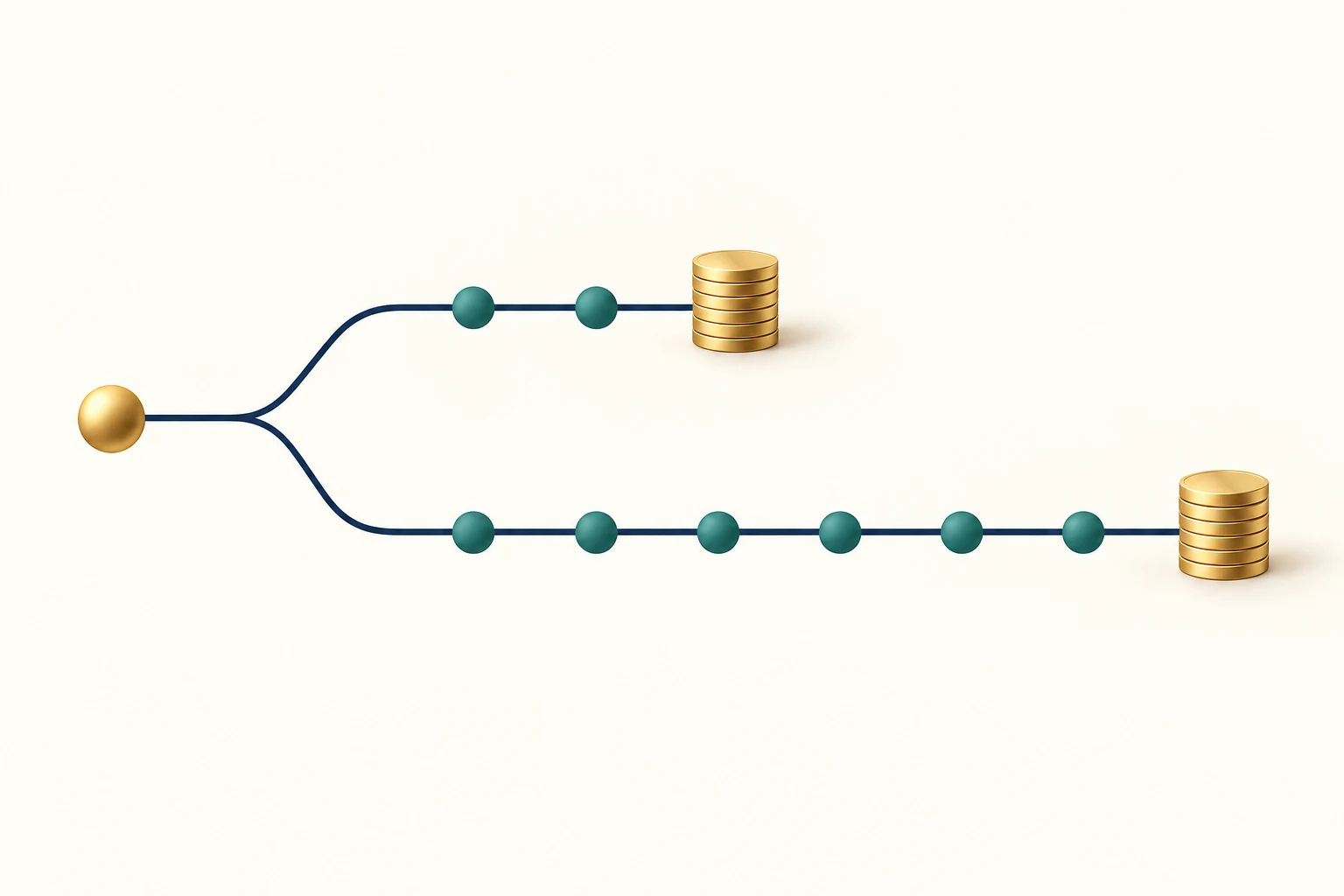
Worked example: a call can change the quoted yield
Assume a hypothetical bond has $1,000 face value, a 6% annual coupon paid semiannually, five years to maturity, and a market price of $1,080 on a coupon date. It pays $30 every six months. Suppose its first permitted call is after two years at 102% of face value, or $1,020. Under standard semiannual compounding, the approximate YTC is 4.21%; the approximate YTM to year five is 4.72%. With only those two outcomes in this simplified example, YTW is the lower figure, 4.21%. For YTC, the final call-date cash flow includes the $30 coupon plus $1,020 redemption. These are illustrative calculations, not a live quote; they assume timely payments and exclude fees and taxes.
What does the call schedule actually permit?
The example works only because it states the call date and price. Real documents may have a no-call period, several declining call prices, a par call, a make-whole provision, a sinking-fund schedule, or an extraordinary call triggered by a specified event. Partial redemption can mean only some of a position is called. Notice periods and settlement conventions also matter. A yield screen may use a particular call date or an industry convention, so compare its inputs with the security’s prospectus or official statement. Investor.gov notes that call provisions vary and that optional, sinking-fund, and extraordinary redemptions are distinct features.
What YTW leaves out
YTW is not the worst possible investment result. It is the lowest yield produced by a defined set of contractual cash-flow calculations, typically comparing maturity with applicable calls. It does not model every default, restructuring, sale before redemption, market-price move, tax result, fee, or the future rate available for reinvested coupons and principal. A bond can lose value or fail to pay. The yield calculation also depends on its price, settlement date, accrued interest, day-count rules, and compounding convention. FINRA notes that quoted bond yields rely on payment and reinvestment assumptions; read the calculation basis before comparing quotes.
How rates and price can change the call trade-off
When market rates fall, an issuer may be more likely to consider refinancing if its contract allows a call. A premium bond can then be repaid at a price below the investor’s purchase price, while future above-market coupons disappear. When rates rise, a call may become less attractive to the issuer, so the bond may remain outstanding longer than an investor expected. This uneven response is one reason callable bonds can have different price sensitivity from otherwise similar noncallable bonds. YTW summarizes specified yields; it does not measure duration, call probability, or the bond’s full response to changing rates. See [bond duration and convexity](/en/learn/bond-convexity-duration-price-sensitivity-explained) for a separate price-sensitivity measure.
Compare callable bonds without treating YTW as a promise
Before comparing two callable bonds, check the current price and settlement basis; coupon and maturity; first call date, every later call date, and each redemption price; call-protection period; any partial-redemption or make-whole clause; and the yield method shown by the quote provider. Then compare YTM, each applicable YTC, and YTW on the same basis. A higher coupon or higher displayed YTW does not by itself establish better value, lower credit risk, or a suitable holding period. For the underlying yield definitions, see [coupon rate, current yield, and YTM](/en/learn/bond-coupon-rate-vs-current-yield-vs-ytm-explained). This guide explains bond mechanics; it is not a recommendation or a prediction that an issuer will exercise a call.
Common questions
Q1Does YTW tell me whether a bond will be called?
No. It compares calculated yields for applicable contractual cash-flow scenarios. It does not estimate the probability that the issuer will exercise its right.
Q2Can an issuer call a bond on any date?
Only when the bond’s terms permit it. Check the first eligible date, later call dates, prices, notice rules, and any special triggers in the prospectus or official statement.
Q3Is YTW the return I will actually earn?
Not necessarily. The realized result depends on whether payments arrive, whether and when a call occurs, reinvestment rates, the price and timing of a sale, costs, and taxes.
Sources and further reading
Report an issue
We’ll prepare an email with this article link. Mark receives the report only after you send it
Quick check
Read the guide? Check yourself with 3 questions
Question 01
Who holds the right to call a callable bond?
Choose an answer to see the explanation